The best design work comes from good briefs. Not long ones. Clear ones.
A brief isn’t a list of instructions. It’s the information a designer needs to make good decisions on your behalf. Here’s what to put in it.
1. About your business
What you do, in one or two sentences. How long you’ve been going. What you’re proud of. Write it like you’d explain it to a friend, not like your About page.
2. Who you’re for
Your best customers: who they are, what they care about, and why they pick you. “Everyone” isn’t an answer. The more specific you are, the sharper the design can be.
3. What’s not working now
Why are you looking for a designer at all? Maybe your logo looks dated, you’re launching something new, or you’re losing work to people who look more professional. Be honest. This is the most useful part of the brief.
4. What you need
List the things you actually need at the end: logo, colours and fonts, guidelines, social templates, signage. If you’re not sure, say so. A good designer will help you work it out.
5. Three words
Pick three words you’d like people to use to describe you. Friendly, sharp, premium, local, bold. These steer every decision, from colour to typeface.
6. Likes and dislikes
Share brands you admire and ones you don’t, from any industry. Explain why. “I like how calm this feels” is far more useful than “make it look like this”.
7. Budget and timings
It can feel awkward, but sharing a budget helps a designer suggest what’s realistic. Add any deadlines too, like a launch date or a print run.
8. Who decides
Who signs things off? If it’s a group, say so now. Plenty of projects slow down because a partner sees the work for the first time at the end.
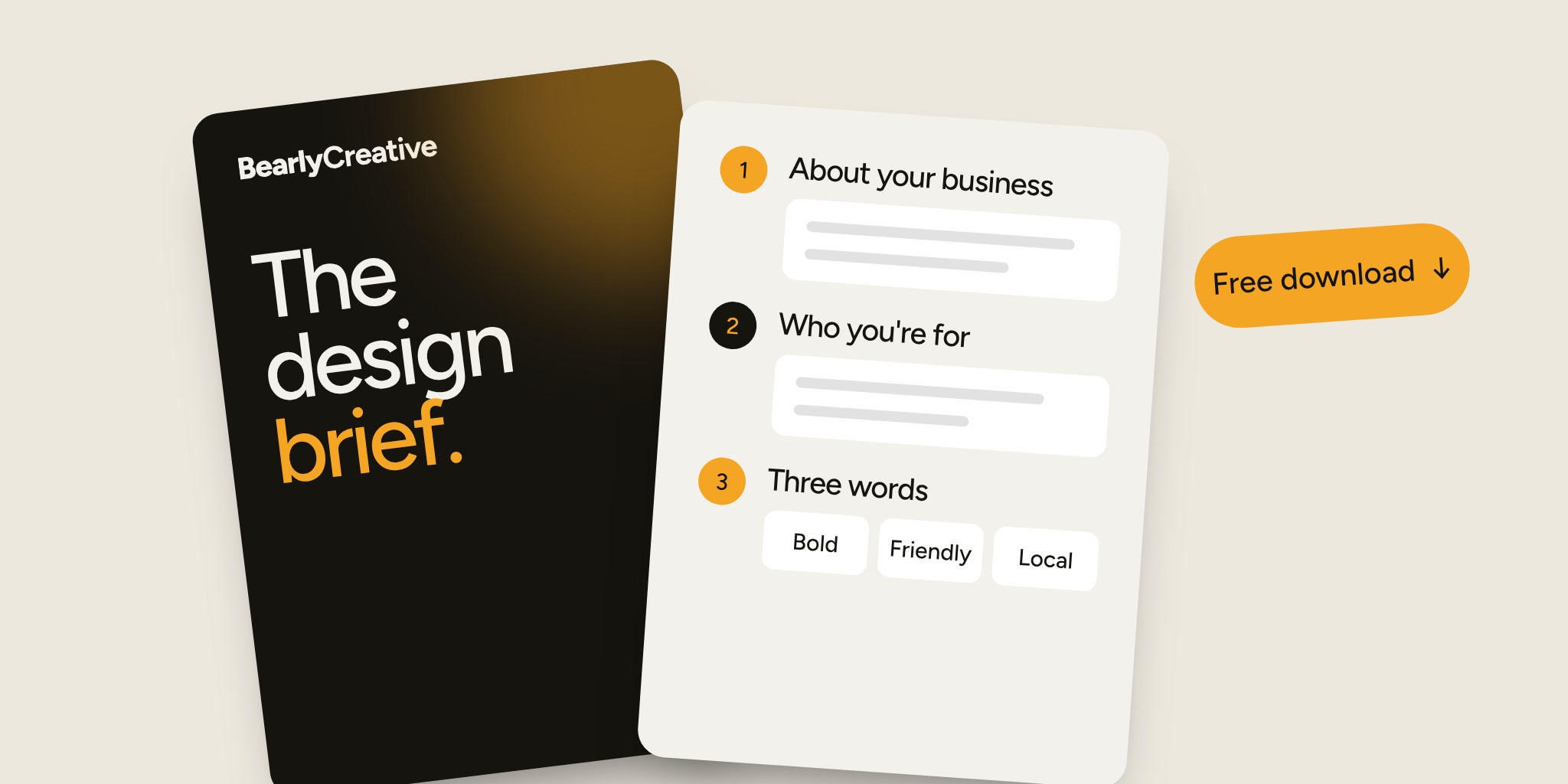
Download the free brief template
I’ve put all of this into a simple template you can fill in. It works for any designer, not just me.